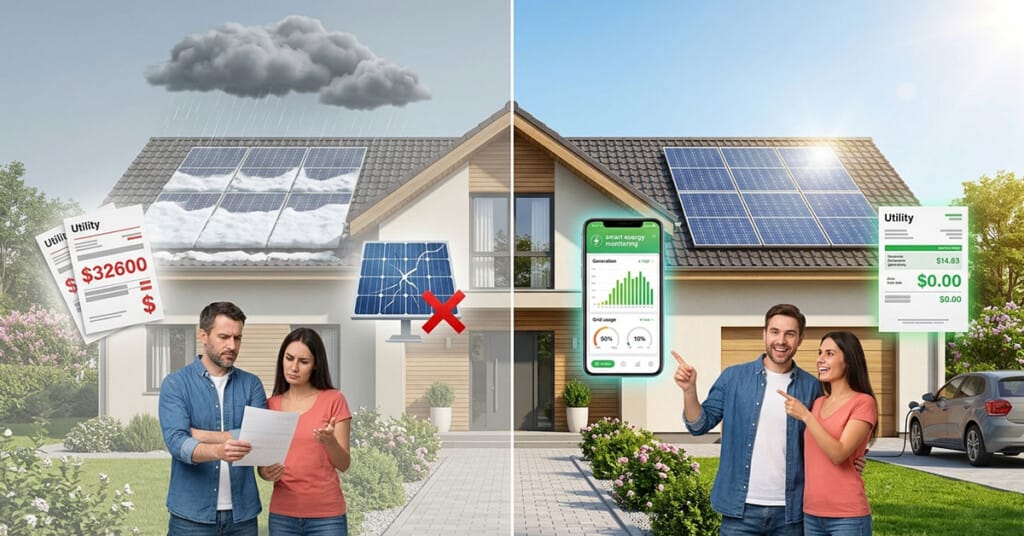
Many people still avoid solar because of common solar panel myths. These ideas usually come from old information or things people hear online without checking the facts. Because of this, homeowners often stay confused about how solar really works today.
In reality, modern residential solar systems are simple, reliable, and widely used. They work in many weather conditions, cost less than before, and can help lower electricity bills. Still, many people ask questions like are solar panels worth it, especially when they hear mixed opinions.
In this article, we will clear up the most common solar panel myths and share easy solar panel facts so you can understand how solar energy really works in everyday homes.
Why Solar Panel Myths Persist?
Outdated Information
Many solar panel myths come from old systems. In the past, solar panels were expensive and less powerful. People still remember those early problems, even though today’s systems are much better.
Misleading Online Claims
Some websites and posts share wrong or incomplete solar energy misconceptions. This makes solar sound more complicated or risky than it really is.
Fast Changes in Solar Technology
Solar technology improves quickly. New panels today are more efficient and stronger. But many people still believe old information, even though solar panel efficiency has improved a lot.
Myth #1 – Solar Panels Don’t Work on Cloudy Days
Reality
This is one of the most common solar panel myths. Many people think solar only works in strong sunlight. The truth is, solar panels still work on cloudy days. They use daylight, not just direct sun. Even when the sky is gray, light still reaches the panels and creates power.
Modern systems are built to handle different weather, so your home still gets energy even when it is not sunny.
Myth #2 – Solar Panels Are Too Expensive for Most Homeowners
Reality
This is an old idea that is no longer true. The cost of home solar installation has dropped a lot in recent years.
There are also:
- Payment plans
- Tax benefits in many areas
- Solar loan options
Because of this, more homeowners can afford solar than before. Over time, savings on electricity bills can make solar a smart choice. This is why many people still ask are solar panels worth it—and for many homes, they are.
Myth #3 – Solar Panels Require Constant Maintenance
Reality
Many people believe solar panel myths that suggest solar systems need a lot of care. In truth, they are very easy to maintain. Most residential solar systems only need light cleaning once in a while. Rain often helps wash away dust. You may also need a simple check once or twice a year. Since there are no moving parts, there is very little that can go wrong.
Myth #4 – Solar Panels Will Damage My Roof
Reality
Some people worry about rooftop solar myths, like roof damage. But this is not true when panels are installed properly. Professional installers use safe mounting systems. These systems hold the panels firmly without harming the roof. In fact, solar panels can help protect your roof by covering it from the sun, rain, and heat.
Myth #5 – Solar Panels Stop Working During Winter
Reality
Another common solar panel myth is that solar stops working in winter. This is false.
Solar panels still produce electricity as long as there is daylight. Cold weather does not stop them. Sometimes, cold temperatures can even help performance. Snow may cover panels for a short time, but it usually slides off or melts quickly.
Myth #6 – Solar Panels Only Make Sense in Sunny States
Reality
Many solar energy misconceptions say solar only works in hot, sunny places. This is not true. Solar panels work in many climates, even in cloudy or cold regions. They need daylight, not constant sunshine. This means residential solar systems can work in many different locations, not just sunny areas.
Myth #7 – Solar Systems Can’t Power an Entire Home
Reality
A properly designed system can power most or even all of a home. Experts look at how much electricity your home uses and design the system to match it. This makes home solar installation more efficient and useful. Many families already run their homes fully on solar power or greatly reduce their bills.
Myth #8 – Solar Panels Have a Short Lifespan
Reality
This is one of the biggest solar panel myths. In reality, solar panels last a long time.
Most panels work for 25 to 30 years or more. Many come with long warranties from manufacturers. Even after many years, they still produce electricity. They just may produce slightly less than when new.
Myth #9 – Solar Technology Changes Too Fast to Invest Now
Reality
Some people think solar will become outdated quickly. But this is not true. Today’s solar systems are already strong and well-tested. While improvements continue, they are small and steady. Modern solar panel efficiency is already high, so waiting does not always bring major benefits.
Myth #10 – Homes with Solar Panels Are Harder to Sell
Reality
This is another outdated solar panel myth. In fact, homes with solar are often more attractive to buyers.
People like homes with:
- Lower electricity bills
- Energy savings
- Modern upgrades
In many cases, solar can even increase home value instead of lowering it.
What Homeowners Should Consider Before Installing Solar?
Roof Condition
Your roof should be strong, stable, and free from damage before installing solar panels. A good roof helps support the system safely and ensures your residential solar systems last longer without issues. Weak roofs may need repair first to avoid future problems.
Energy Usage
Understanding your electricity usage is very important before installation. It helps design the right system size for your home. When your home solar installation matches your energy needs, it works more efficiently and can help reduce wasted power and extra costs.
Local Rules
Different areas may have rules, permits, or approvals needed before installing solar panels. Following these rules ensures your system is legal and safely installed. Checking local requirements early helps avoid delays and makes the installation process smooth and hassle-free.
Incentives
Many regions offer incentives like rebates, discounts, or tax benefits for solar installation. These programs help reduce the total cost of switching to solar. Using these incentives makes your investment more affordable and improves overall savings over time.
Key Takeaways about Solar Energy
Many solar panel myths are based on old or incorrect information. Today’s solar systems are much better and easier to use.
Simple facts:
- Solar works even on cloudy days
- Maintenance is low
- Systems last for decades
- Costs have dropped a lot
- Solar can increase home value
Solar energy is now a practical choice for many homeowners.
Myths vs Reality
| Myth | Reality |
| Solar doesn’t work on cloudy days | It still produces power from daylight |
| Solar is too expensive | Costs are much lower now |
| Solar damages roofs | Proper installation protects roofs |
| Solar needs constant care | Very low maintenance needed |
| Solar only works in sunny places | Works in many climates |
| Solar can’t power a full home | It can power most or all homes |
| Solar has a short life | It lasts 25–30+ years |
| Technology changes too fast | It is already stable |
| Homes with solar are hard to sell | They often sell easier |
| Solar stops in winter | It still works in daylight |
Ready to Switch to Solar with Confidence?
Understanding the truth behind solar panel myths helps us make smarter and more confident decisions as homeowners. Solar energy is not complicated—it is simple, reliable, and more affordable than many people think today. When we understand the real facts, we can clearly see the long-term benefits of clean energy for our homes.
If we you are planning to explore residential solar systems or thinking about a smooth home solar installation, we are here to guide you at every step. Let’s make the switch easier, clearer, and stress-free together. Contact GlobalTech Group Ltd. for simple advice, honest support, and the right solar solution for your home.
FAQ
Do solar panels work during rain?
Yes, solar panels still work during rain. They use daylight, not only strong sunlight. Power output may be a little lower on dark rainy days, but residential solar systems continue generating electricity and supporting your home energy needs.
How long do residential solar panels last?
Most solar panels last around 25 to 30 years or more. Even after this time, they still produce electricity, but at lower levels. Good solar panel efficiency and regular basic care help them work well for many years.
Are solar panels worth it in colder areas?
Yes, solar panels work well in colder areas too. They do not need heat, only daylight. In fact, cooler temperatures can support better performance. Many homes in cold regions successfully use home solar installation for long-term savings.
Can solar panels increase home value?
Yes, solar panels can increase home value. Buyers like homes with lower electricity bills and clean energy systems. A well-installed residential solar system can make a home more attractive and may help it sell faster in many markets.
How much maintenance do solar panels need?
Solar panels need very little maintenance. Most systems only need light cleaning and a basic check once or twice a year. Since there are no moving parts, solar panel myths about high maintenance are not true for modern systems.
Do solar panels work during power outages?
Solar panels alone usually do not work during power cuts for safety reasons. However, if you have a battery backup system, you can still use stored energy. This setup improves reliability in modern home solar installation systems.
What if my roof needs repair later?
If your roof needs repair, solar panels can be safely removed and reinstalled by professionals. Proper planning during installation helps avoid damage. This is why residential solar systems are designed to protect both panels and the roof structure.
How many panels does a home need?
The number of panels depends on your home’s electricity use, roof space, and sunlight levels. Most homes need around 15 to 25 panels. A proper home solar installation is designed to match your daily energy needs.
Can solar remove my electricity bill completely?
In some cases, solar can greatly reduce or even remove electricity bills. It depends on system size, sunlight, and usage habits. A well-planned residential solar system helps balance energy use and reduce monthly power costs.
Are solar warranties transferable?
Yes, most solar warranties can be transferred to a new homeowner. This is helpful when selling a house. It adds value because the new owner still benefits from the system and its long-term solar panel efficiency coverage.
Ready to Switch to Solar with Confidence?
Understanding the truth behind solar panel myths helps us make smarter and more confident decisions as homeowners. Solar energy is not complicated—it is simple, reliable, and more affordable than many people think today. When we understand the real facts, we can clearly see the long-term benefits of clean energy for our homes.
If you are planning to explore residential solar systems or thinking about a smooth home solar installation, we are here to guide you at every step. Let’s make the switch easier, clearer, and stress-free together. Contact GlobalTech Group Ltd. for simple advice, honest support, and the right solar solution for your home.