A fire alarm system protects a building only if every part works properly. Fire alarm inspection vs fire alarm testing is a common topic because both services are required to keep a fire alarm system safe and reliable. An inspection checks the condition of the equipment and looks for visible problems. Testing confirms that alarms, detectors, and other devices respond correctly during operation. Knowing how each service works helps property owners make better maintenance decisions, avoid unexpected issues, and meet fire safety requirements.
Why Are Inspection and Testing Not the Same?
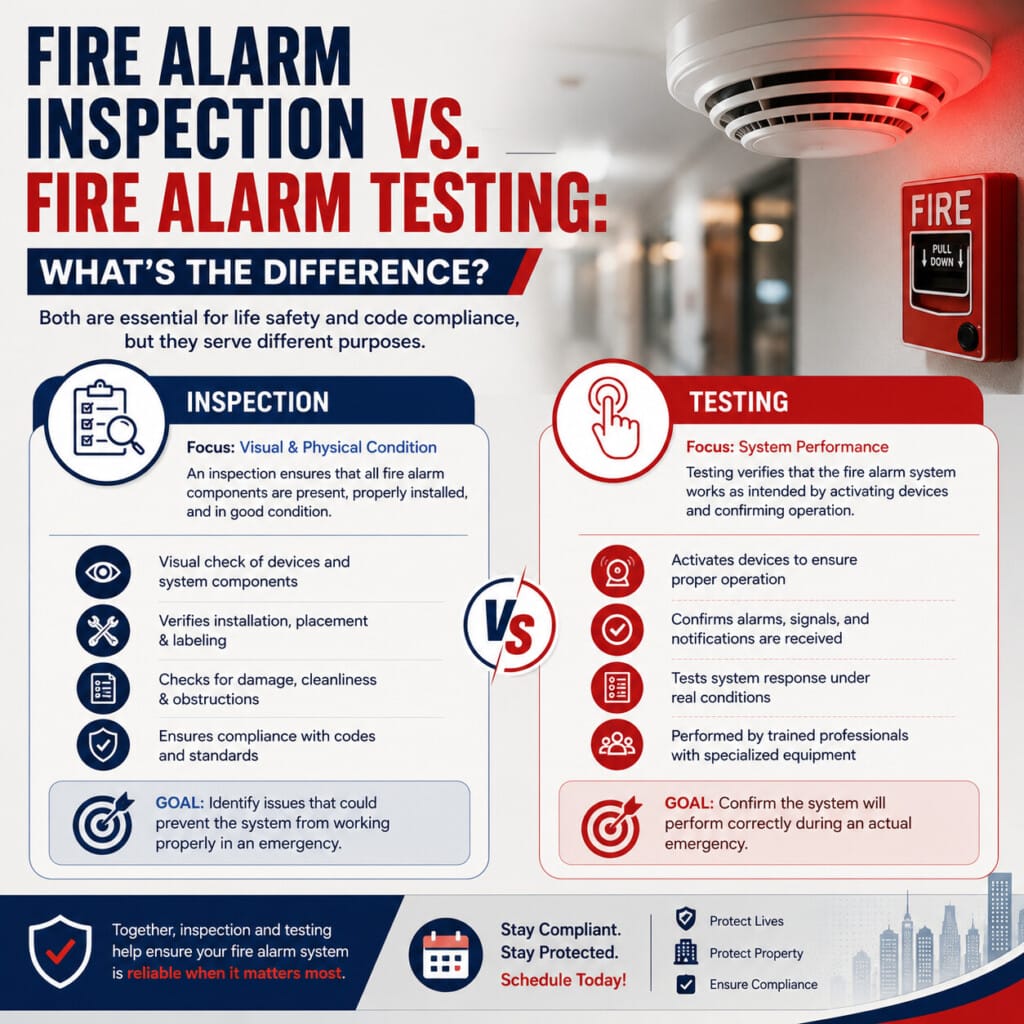
Fire alarm inspection checks the condition of the system
A fire alarm inspection is a visual review of the equipment. It looks for damage, blocked devices, missing parts, loose connections, or anything else that could affect the system before an emergency occurs.
Fire alarm testing checks system performance.
Fire alarm testing activates detectors, pull stations, horns, strobes, and other devices. It confirms every part responds correctly and communicates with the control panel during normal system operation.
Inspection helps find visible problems early.
Regular inspections identify issues before they become larger repairs. Finding damaged equipment, low batteries, or blocked devices early helps keep the fire alarm system in good working condition.
Testing confirms the system is ready for an emergency
Testing shows whether the complete fire alarm system can perform as expected. It verifies alarms sound properly, signals are received, and connected devices work together during an emergency.
Understanding a Fire Alarm Inspection
A Fire alarm inspection is a detailed visual check of the entire fire alarm system. It looks for damaged, blocked, or missing components before they become safety concerns. Technicians examine detectors, pull stations, control panels, batteries, wiring, and alarm devices.
Regular inspections also identify changes inside commercial buildings, such as renovations or new equipment, which could affect system performance.
Common Items Checked During an Inspection
Every inspection follows a planned process. Looking at each part of the system helps keep maintenance consistent and complete.
A typical inspection may include:
- Smoke and heat detectors
- Manual pull stations
- Fire alarm control panel
- Horns and strobe lights
- Backup batteries
- Visible wiring and connections
- Signs of damage or corrosion
- Device accessibility and placement
Finding small problems early can reduce repair costs and prevent larger system failures later.
Understanding Fire Alarm Testing
Fire alarm testing checks whether the entire system works properly during an emergency. Technicians activate smoke detectors, pull stations, horns, strobes, and other devices to confirm they respond correctly. The control panel and monitoring connection are also verified if applicable. Unlike an inspection, testing confirms the system operates as intended not just that its components appear to be in good condition.
A Simple Comparison between Inspection and Testing
Both services support fire safety, but each one has a different purpose. Looking at the comparison below makes the difference easier to understand.
| Fire Alarm Inspection | Fire Alarm Testing |
| Reviews the condition of the equipment | Checks how the equipment performs |
| Looks for visible damage or missing parts | Activates devices to confirm operation |
| Confirms devices are installed correctly | Confirms alarms send the correct signals |
| Identifies maintenance concerns | Verifies the system responds during an emergency |
| Focuses on appearance and condition | Focuses on system performance |
Choosing one service instead of the other leaves part of the system unchecked. Both inspection and testing work together to improve fire protection.
Why Commercial Buildings Need Both Services
Office buildings, warehouses, schools, healthcare facilities, and retail spaces depend on reliable fire protection every day. Fire alarm systems remain inactive most of the time, so problems can stay hidden until an emergency happens.
A regular Commercial fire alarm inspection helps identify damaged equipment before it causes larger issues. Missing covers, blocked detectors, or weak backup batteries may seem like small concerns, but each one can affect system performance.
Fire alarm testing adds another level of protection. It confirms every device can respond correctly when needed. Together, inspection and testing provide better confidence that the complete system is ready to protect people and property.
Commercial property owners also benefit from scheduled maintenance because it supports fire code compliance and creates accurate service records for inspections and insurance requirements.
Signs Your Fire Alarm System May Need Attention
A fire alarm system can develop problems over time, even if it has not been used during an emergency. Dust, aging parts, electrical issues, or changes inside the building can affect how the system works. Regular maintenance helps find these problems before they become serious.
Watch for these common signs:
- Trouble lights or warning messages on the control panel
- Smoke detectors covered by dust or paint
- Low backup battery alerts
- Damaged pull stations or alarm devices
- Horns or strobe lights not working properly
- Devices blocked by furniture, storage, or new walls
- Missing inspection labels or outdated service records
Ignoring these signs can increase safety risks and lead to costly repairs later. Prompt service keeps the system ready for daily operation.
Choosing the Right Fire Alarm Service Provider
Fire alarm systems protect lives and property, so maintenance should always be completed by trained professionals. Experience, proper training, and knowledge of fire codes all make a difference.
A qualified service provider should offer:
- Complete system inspections
- Functional testing for all devices
- Clear maintenance reports
- Code-compliant service
- Repair and replacement recommendations
- Ongoing preventive maintenance programs
Clear communication is also important. Service reports should explain any issues found, the work completed, and any steps needed to keep the system working properly.
Regular Maintenance Protects More Than Equipment
Fire alarm systems do more than sound an alarm. They give people time to leave the building safely and allow emergency responders to act quickly. Every working detector, pull station, horn, and control panel supports this process.
Regular maintenance also protects business operations. Finding a small issue during a scheduled visit is much easier than dealing with a system failure during an emergency or a failed fire inspection.
Building layouts also change over time. New offices, storage areas, equipment, or renovations can affect fire alarm devices. Routine inspections and testing help confirm the system still provides the right level of protection after these changes.
Frequently Asked Questions
What is the main difference between a fire alarm inspection and a fire alarm test?
A fire alarm inspection checks the condition of the equipment and looks for visible problems. A fire alarm test activates the system to confirm every device responds correctly during operation.
Can a fire alarm system pass an inspection but still fail a test?
Yes. Equipment may look clean and undamaged during an inspection but still fail to operate correctly during testing because of electrical faults, worn components, or communication issues.
Why is regular fire alarm maintenance important for commercial buildings?
Regular maintenance improves safety, supports fire code compliance, reduces unexpected repairs, and confirms the fire alarm system is ready to respond during an emergency.
How long does a commercial fire alarm inspection take?
The time depends on the size of the building and the number of devices installed. Small buildings may take a few hours, while larger facilities can require more time.
Who should perform fire alarm inspections and testing?
Fire alarm inspections and testing should be completed by trained and qualified professionals who understand fire codes, system requirements, and manufacturer guidelines.
Final Thoughts
Understanding Fire alarm inspection vs fire alarm testing makes it easier to build a complete maintenance plan. An inspection checks the condition of the system, while testing confirms every part works as expected.
Both services are important for protecting people, supporting fire code compliance, and reducing unexpected problems. Scheduling regular maintenance gives building owners greater confidence that the fire alarm system is ready whenever it is needed.
Protect Your Business with Trusted Fire Alarm Services
Keep your fire alarm system ready for every emergency with expert support from GlobalTech Group. We provide professional inspections, testing, maintenance, and code-compliant solutions for commercial buildings across Alberta. Our experienced team helps protect people, property, and daily operations with dependable service.