Quick overview
Fire alarm inspections are a key part of protecting commercial buildings across Alberta. Every business must follow inspection schedules based on fire safety codes and system requirements.
Missing an inspection can lead to safety risks and compliance issues. This guide explains how often commercial fire alarm systems should be inspected, what affects inspection schedules, and why regular inspections are important for Alberta businesses.
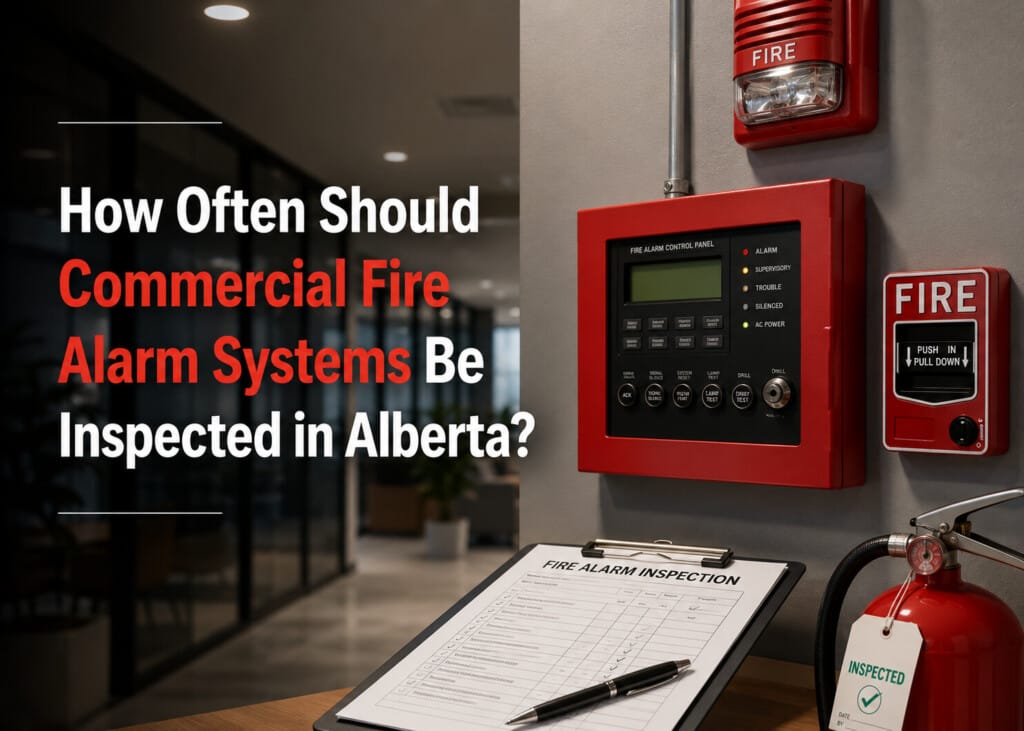
Commercial fire alarm systems in Alberta must be inspected at scheduled intervals to meet fire safety requirements and keep the system ready for an emergency. Commercial fire alarm inspection in Alberta includes a complete annual inspection performed by qualified professionals, while some system components require more frequent checks under Canadian fire safety standards.
Following the correct inspection schedule helps businesses stay compliant, identify problems early, and keep employees, visitors, and property protected.
Fire Alarm Inspection Requirements in Alberta
Commercial buildings across Alberta follow fire safety requirements outlined in the Alberta Fire Code and applicable Canadian standards.
1. Follow Alberta Fire Code Requirements
Commercial properties must follow the Alberta Fire Code and related fire alarm standards. These guidelines explain inspection and testing requirements for different parts of the system.
2. Complete Annual System Inspections
A full fire alarm inspection is completed once a year by qualified technicians. This review checks the overall condition of the system and identifies any issues that may affect performance.
3. Perform Regular Component Checks
Certain fire alarm components require additional visual checks or scheduled inspections throughout the year to confirm they remain accessible and in proper working condition.
4. Maintain Proper Inspection Records
Building owners and property managers must keep accurate inspection records. These documents may be reviewed during fire safety inspections, audits, or insurance assessments.
Recommended Inspection Schedule for Commercial Buildings
Fire alarm systems contain several connected devices. Each one has its own inspection schedule to support reliable operation.
Step 1: Complete Annual System Inspection
A qualified technician should complete a full inspection of the commercial fire alarm system each year. This includes reviewing the complete system and checking if all parts meet safety requirements.
Step 2: Check the Fire Alarm Control Panel
The control panel should be reviewed regularly to confirm it is working properly. Any warning signals, faults, or system alerts should be identified and addressed.
Step 3: Inspect Smoke and Heat Detectors
Smoke and heat detectors should be checked according to applicable fire safety standards. Technicians confirm they are clean, accessible, and positioned correctly.
Step 4: Review Manual Pull Stations
Manual pull stations should remain visible, easy to access, and free from damage. Regular checks confirm they are ready to use during an emergency.
Step 5: Examine Horns, Strobes, and Notification Devices
Alarm devices should be inspected to confirm they are working properly and are not blocked, damaged, or affected by building changes.
Step 6: Check Backup Batteries and Power Components
Backup batteries and power supply components should be inspected to ensure the system can continue operating during a power interruption.
Step 7: Confirm Device Accessibility
Fire alarm devices should remain clear of furniture, storage materials, and renovation work. Blocked devices can reduce the system’s ability to provide proper protection
Why Inspection Frequency Matters for Alberta Businesses
Fire alarm systems remain active every day, even though they are rarely used during an emergency. Small problems can develop over time without being easy to notice. Dust inside detectors, damaged devices, or blocked pull stations can affect system performance.
Regular inspections help identify these issues before they become larger safety concerns. They also support compliance with Alberta fire safety requirements and reduce the chance of unexpected problems during an emergency.
Commercial properties such as offices, schools, warehouses, healthcare facilities, and retail buildings all depend on reliable fire alarm systems to protect people and property.
What a Commercial Fire Alarm Inspection Includes
A Fire alarm inspection in Alberta involves a detailed review of the entire fire alarm system. Qualified technicians inspect visible equipment, confirm devices remain accessible, and look for anything that could affect system performance.
During an inspection, technicians may review:
- Smoke detectors
- Heat detectors
- Manual pull stations
- Fire alarm control panel
- Horns and strobe lights
- Backup batteries
- Visible wiring and connections
- Device locations and physical condition
Each inspection provides valuable information about the condition of the system and identifies any issues that need attention before they affect building safety.
Factors That Can Change Inspection Needs
Every commercial building is different. While annual inspections are required for the complete system, several factors can influence additional inspection needs throughout the year.
Building size is one important factor. A large industrial facility may have hundreds of devices, while a small office has far fewer. Renovations, equipment upgrades, and changes to the building layout can also affect inspection requirements.
Previous inspection findings may lead to additional follow-up inspections if repairs or corrections are needed. Keeping the fire alarm system in good condition supports reliable operation and continued compliance with Alberta fire safety requirements.
Keeping Inspection Records Up to Date
Inspection records are an important part of every fire alarm program. They show when inspections were completed, what was checked, and if any concerns were found. These records also help building owners track the condition of the system over time.
For Alberta businesses, accurate records may be requested during fire safety inspections or insurance reviews. Keeping them organized also makes it easier to plan future inspections and confirm the system has been serviced at the required intervals.
Common Issues Found During Fire Alarm Inspections
Regular inspections can identify small problems before they become larger safety concerns. Finding these issues early helps keep the fire alarm system working as expected.
Some of the most common inspection findings include:
- Smoke detectors blocked by dust or stored materials
- Low or damaged backup batteries
- Manual pull stations that are difficult to access
- Damaged horns or strobe lights
- Loose or damaged wiring
- Fault messages on the fire alarm control panel
- Devices affected by building renovations
Correcting these issues quickly improves system reliability and supports safer commercial buildings.
Why Qualified Professionals Should Perform Inspections
Fire alarm systems are made up of connected devices that must work together during an emergency. A complete inspection requires knowledge of fire alarm systems, current fire safety standards, and proper inspection procedures.
Qualified technicians know what to look for during an inspection. They can identify damaged equipment, confirm the system meets code requirements, and document any problems that need to be corrected.
Professional inspections also provide clear reports, making it easier for building owners and facility managers to keep accurate service records.
Planning Inspections Before They Are Due
Waiting until an inspection is overdue can create unnecessary risks. Planning inspections in advance helps businesses stay on schedule and reduces the chance of missing important inspection dates.
Creating an annual inspection calendar is a simple way to stay organized. Property managers can also schedule inspections during quieter business periods to reduce disruption to daily operations.
A planned approach supports compliance and gives building owners confidence that the fire alarm system is ready whenever it is needed.
Frequently Asked Questions
How often should a commercial fire alarm system be inspected in Alberta?
A complete commercial fire alarm system should be inspected annually by qualified professionals. Some components also require more frequent checks based on the Alberta Fire Code and applicable Canadian fire safety standards.
Who is responsible for arranging fire alarm inspections?
The building owner or property manager is responsible for making sure required inspections are completed and inspection records are kept up to date.
What happens if a commercial fire alarm inspection is missed?
Missing an inspection may lead to fire code compliance issues, increase safety risks, and create problems during insurance reviews or official fire safety inspections.
Does every commercial building in Alberta need annual fire alarm inspections?
Yes. Commercial buildings with fire alarm systems are generally required to complete annual inspections, along with other scheduled checks required under applicable fire safety standards.
What is the difference between a fire alarm inspection and commercial fire alarm testing?
An inspection checks the condition and accessibility of fire alarm equipment. Commercial fire alarm testing confirms alarms, detectors, and other devices operate correctly when activated.
Final Thoughts
Keeping up with Commercial fire alarm inspections in Alberta is an important responsibility for every business owner and property manager. Regular inspections support fire code compliance, identify problems early, and confirm the fire alarm system is ready to respond during an emergency.
Following the correct inspection schedule is one of the best ways to protect people, property, and daily business operations
Protect Your Building with Trusted Fire Alarm Services
Stay prepared with professional fire alarm inspections from GlobalTech Group. We provide reliable inspection and testing services for commercial buildings across Alberta. Our experienced team helps businesses meet fire code requirements while keeping fire alarm systems ready to respond when every second matters.