Quick Overview
A fire alarm system is one of the most important safety systems in a commercial building. Over time, older equipment may become less reliable or unable to support changing business needs. Recognizing the warning signs early helps businesses improve safety, avoid system problems, and keep their properties prepared for emergencies.
A commercial fire alarm system may need an upgrade when it becomes outdated, has frequent issues, or no longer supports the needs of the building. Older systems can struggle with new safety demands, building changes, and modern technology. A Commercial fire alarm system upgrade helps businesses improve system reliability, support better protection, and prepare their properties for future needs.
Aging Equipment Can Signal the Need for an Upgrade
Fire alarm equipment does not last forever. Older control panels, detectors, and notification devices may become harder to maintain as replacement parts become limited. Aging systems may also lack features available in newer fire protection solutions.
A system that has been installed for many years may not provide the same level of performance as modern equipment. Regular checks can help identify whether the system is still meeting current safety expectations.
Older systems may also create challenges during building updates. If equipment cannot support new devices or expanded coverage areas, an upgrade may become necessary.
Frequent False Alarms and System Problems
Repeated false alarms are a common sign that a fire alarm system may need attention. While occasional issues can happen, frequent alarms can affect daily operations and reduce confidence in the system.
False alarms may happen because of outdated devices, damaged components, or equipment that no longer works properly with the rest of the system. These issues should be reviewed to determine whether repairs or a full upgrade are needed.
A reliable fire alarm system should provide accurate alerts during emergencies without causing unnecessary disruptions for building occupants.
Building Changes That Require Fire Alarm Updates
Commercial buildings change over time. Renovations, new office areas, additional storage spaces, or changes in building use can affect the existing fire alarm setup. A system designed for an older building layout may not provide proper coverage after major changes.
New areas may require additional detectors, notification devices, or updated control equipment. Businesses planning expansion should review their fire alarm system to confirm it can support the updated space. An upgrade to a fire alarm system may be needed when the current setup cannot meet new building requirements.
Limited Features in Older Fire Alarm Systems
Modern fire alarm systems offer features that help businesses manage safety more effectively. Older systems may not include newer options that support faster alerts and easier system monitoring.
Some older systems may have limited communication abilities or may not connect well with other building safety solutions. This can make it harder for facility teams to respond quickly during an emergency.
Updated systems can provide improved monitoring options, better notification methods, and easier management for commercial properties with changing safety needs.
Signs Your Fire Alarm System May Need Attention
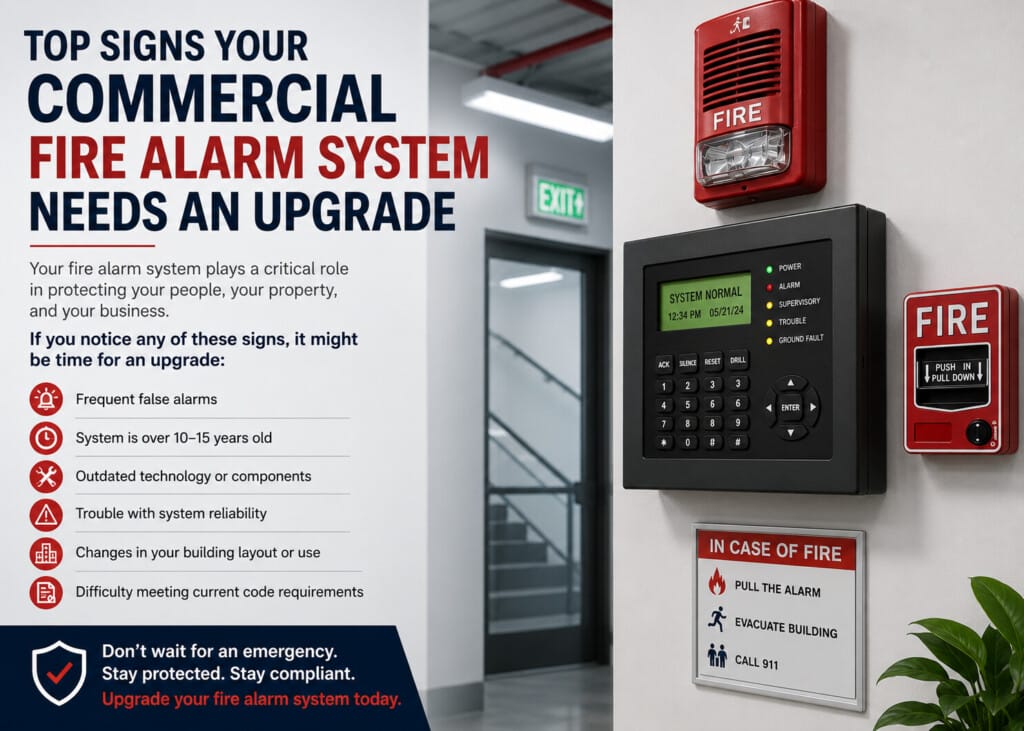
Recognizing early warning signs allows businesses to take action before a major system issue occurs. A review may be needed if any of these concerns appear:
- The control panel is outdated or difficult to operate.
- The system has frequent fault alerts or warning signals.
- Replacement parts are difficult to find.
- The building has expanded, but the system has not been updated.
- The fire alarm system cannot support newer safety features.
- Repairs are becoming more frequent.
- Devices no longer provide proper coverage throughout the building.
These signs do not always mean a complete replacement is required. A professional assessment can help determine whether repairs, upgrades, or a new system would be the best solution.
Benefits of a Modern Fire Alarm System
A newer fire alarm system can provide better support for commercial buildings with updated safety needs. Modern equipment is designed to improve communication, monitoring, and system performance.
For businesses, an upgraded system can make it easier to identify issues, manage alerts, and maintain a safer environment for employees and visitors.
Business fire alarm systems should match the size, layout, and safety requirements of the property. A properly designed system helps provide dependable protection and supports the long-term needs of the building.
Choosing the Right Time for a Fire Alarm Upgrade
Knowing when to upgrade a fire alarm system helps businesses avoid unexpected problems. Waiting until equipment fails completely can create safety concerns and possible disruptions to daily operations.
Several factors can help determine if an upgrade should be considered. These include the age of the system, condition of existing equipment, building changes, and whether the current system can support future needs.
A professional review can provide a clearer understanding of the system’s condition. This allows business owners and facility managers to make informed decisions based on safety needs and building requirements.
Supporting Safer Commercial Buildings with Updated Systems
Commercial properties depend on fire alarm systems that can respond quickly during emergencies. Updated systems are designed to provide better reliability and support the changing needs of modern buildings.
Newer solutions can include improved control panels, better communication features, and easier monitoring options. These features help facility teams understand system conditions and respond more effectively.
A properly planned upgrade also supports businesses with larger spaces, multiple areas, or changing layouts. The right system design helps ensure important areas receive proper protection.
Professional Evaluation before an Upgrade
Every commercial building has different safety needs. An upgrade should be based on the condition of the current system, building layout, and future requirements.
A professional evaluation reviews existing equipment, identifies limitations, and recommends suitable improvements. This approach helps businesses avoid unnecessary changes while ensuring important safety concerns are addressed.
Working with experienced fire alarm professionals provides better guidance during the upgrade process and helps create a system that fits the building’s needs.
Frequently Asked Questions
How do I know if my commercial fire alarm system is outdated?
Signs of an outdated system include frequent faults, repeated false alarms, limited features, aging equipment, and difficulty finding replacement parts. A professional review can confirm whether an upgrade is needed.
How long does a commercial fire alarm system last?
The lifespan of a fire alarm system depends on equipment quality, usage, and building conditions. Older systems may need upgrades when parts become unavailable, or the system no longer meets safety needs.
Can a fire alarm system be upgraded without replacing everything?
Yes. Some systems can be updated by replacing certain components, such as control panels or devices. A professional assessment can determine whether partial upgrades or a complete replacement is better.
Why should businesses upgrade older fire alarm systems?
Upgrading an older system can improve reliability, add modern features, support building changes, and provide better protection for employees, visitors, and property.
What areas are checked during a fire alarm system evaluation?
A system evaluation reviews control panels, detectors, notification devices, wiring, building coverage, and overall system performance to identify possible upgrade needs.
Final Thoughts
A reliable fire alarm system is essential for protecting commercial buildings, employees, and visitors. Outdated equipment, repeated problems, and building changes are common signs a system may need attention. A Commercial fire alarm system upgrade can improve reliability, support modern safety needs, and help businesses stay prepared for future challenges.
Strengthen Your Building’s Fire Protection
A modern fire alarm system helps businesses stay prepared for emergencies and changing safety needs. GlobalTech Group provides reliable fire alarm solutions designed for commercial properties.
We help businesses improve system performance, support safety goals, and create dependable protection through professional planning and installation. Our team works with each facility to provide solutions that match its unique requirements.