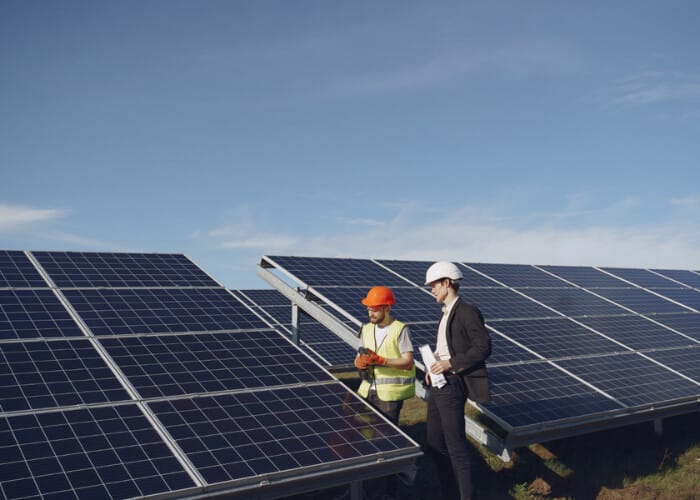
A grid-tied solar system allows a business to generate electricity from solar panels while staying connected to the utility grid. Solar power can supply the building when the panels are producing electricity. The utility grid can provide additional power when solar production is lower than demand.
This setup works well for offices, warehouses, retail buildings, and other commercial properties. For businesses considering commercial grid-tied solar, understanding how solar generation works with the utility grid is important for planning a system suited to the property’s electricity needs and existing electrical setup.
What Is a Grid-Tied Solar System?
A grid-tied solar system connects solar panels to a building’s electrical system and the local utility grid. Solar panels produce electricity from sunlight, while an inverter changes the electricity into a form suitable for use within the property.
Electricity produced by the panels can power lights, computers, heating and cooling equipment, machinery, and other electrical loads. The building remains connected to the utility grid, allowing both sources to work as part of the property’s overall electricity supply.
This type of system is different from a standalone solar setup. A grid-tied system is designed specifically to work alongside the utility connection rather than operate separately from it.
How Solar Power Moves Through a Business
Solar electricity first serves the building’s electrical demand while the system is producing power. The amount used depends on how much electricity the panels are generating and how much power the property needs at the same time.
For example, an office may have computers, lights, and cooling systems running during the day. Solar production can contribute electricity toward these loads while the building continues to operate normally.
If the building needs more electricity than the solar system is producing, additional power can come from the utility grid. This makes the system suitable for businesses with changing energy needs throughout the day.
The Main Parts of a Grid-Tied System
A commercial grid-tied solar system includes several components. Each one has an important role in moving electricity safely and efficiently.
- Solar panels: Capture sunlight and generate electricity.
- Inverter: Converts electricity into a form suitable for the building.
- Electrical equipment: Connects solar generation with the property’s electrical system.
- Utility connection: Keeps the building connected to the wider electricity grid.
- Metering equipment: Records electricity movement according to the applicable setup.
These components must work together with the building’s existing electrical infrastructure. Commercial properties can have more complex electrical requirements than homes, so system design should account for the property’s specific needs.
How the Utility Grid Supports Solar
Solar production and business electricity use can change throughout the day. A grid-tied system allows both to work together smoothly.
- Solar production: Panels generate electricity when sunlight is available. Output can vary with weather, time of day, and seasonal conditions.
- Business demand: Electricity needs change as lighting, equipment, heating, cooling, and other systems operate.
- Grid support: When solar production is lower than the building’s demand, additional electricity can come from the utility grid.
- Continuous connection: The building stays connected to the grid, providing an additional source of electricity as solar production changes.
Why Commercial Buildings Need Individual Planning
Commercial properties can have very different electricity needs. An office may have steady daytime demand from computers, lighting, heating, and cooling. A warehouse may require large lighting systems and equipment.
Retail buildings can have refrigeration, displays, lighting, and longer operating hours. Industrial properties may have higher demand because of machinery and production equipment.
For grid-tied solar systems for businesses, these differences matter. Building size alone does not determine the right solar system. Energy use, operating patterns, roof conditions, electrical infrastructure, and solar exposure should all be considered.
Solar and the Utility Grid in Alberta
Solar production can vary across the year. Alberta receives strong sunlight, but daylight hours change with the seasons. Weather, shading, panel direction, and roof conditions can also affect production.
A commercial solar system should therefore be planned around expected yearly performance. Looking only at peak summer production can give an incomplete picture of how the system may perform throughout the year.
Local utility requirements also matter. A grid-tied project needs to follow the applicable connection process and technical requirements before the system can operate with the utility network.
Planning a Grid-Tied Solar System
Good planning starts with the building’s electricity use. Recent utility bills can show annual consumption and provide useful information about changes in demand throughout the year.
The installation area should also be reviewed.
Roof size, direction, shading, equipment, access areas, and roof condition can all affect panel placement and system capacity. The existing electrical system is another important consideration. A commercial property may have specific electrical requirements based on its size, equipment, and current infrastructure.
Utility requirements should be reviewed as part of the project as well. Proper planning brings the building, solar system, electrical infrastructure, and utility connection together.
Benefits of a Grid-Tied Commercial Solar System
A grid-tied setup allows businesses to use solar power while staying connected to the utility grid. This provides flexibility as solar production and electricity demand change throughout the day.
- Uses solar power: Solar electricity can supply the building’s electrical needs when the system is producing power.
- Keeps grid access: The property remains connected to regular utility electricity when additional power is needed.
- Supports changing demand: The system can work with varying electricity use throughout the business day.
- Fits existing infrastructure: Proper planning can help integrate commercial grid-tied solar with the property’s existing electrical system.
Frequently Asked Questions
How does a grid-tied solar system work for a business?
Solar panels generate electricity for the building while the property remains connected to the utility grid. The grid can supply additional electricity when solar production is below the building’s current demand.
Can a business use solar power and grid electricity together?
Yes. A grid-tied system allows solar generation and utility electricity to work as part of the property’s overall electrical supply, depending on the system design and applicable utility requirements.
What happens to extra solar electricity?
If solar production exceeds the building’s immediate demand, excess electricity may be sent to the utility grid when permitted. The applicable utility and interconnection agreement determine how exported electricity is handled.
Does a grid-tied system need an inverter?
Yes. The inverter converts electricity produced by solar panels into electricity suitable for the building’s electrical system and grid connection.
Is grid-tied solar suitable for every business?
Suitability depends on the property’s electricity use, available installation space, electrical infrastructure, solar conditions, and utility requirements. A site-specific assessment can determine whether the property is suitable.
Final Thoughts
Grid-tied solar allows businesses to generate electricity from solar panels while remaining connected to the utility grid. Solar power can contribute to the building’s demand when production is available, while the grid can provide additional electricity when needed.
The right approach depends on the property’s energy use, electrical system, available space, and local requirements. Businesses considering grid-tied solar systemscan benefit from a clear assessment before selecting a system.
Plan Your Commercial Solar Connection
A successful grid-tied solar project starts with understanding the property and how it uses electricity. GlobalTech Group provides commercial solar solutions designed around individual business requirements, helping properties plan suitable solar systems and integrate them with their existing electrical infrastructure and utility connection.