Quick Overview
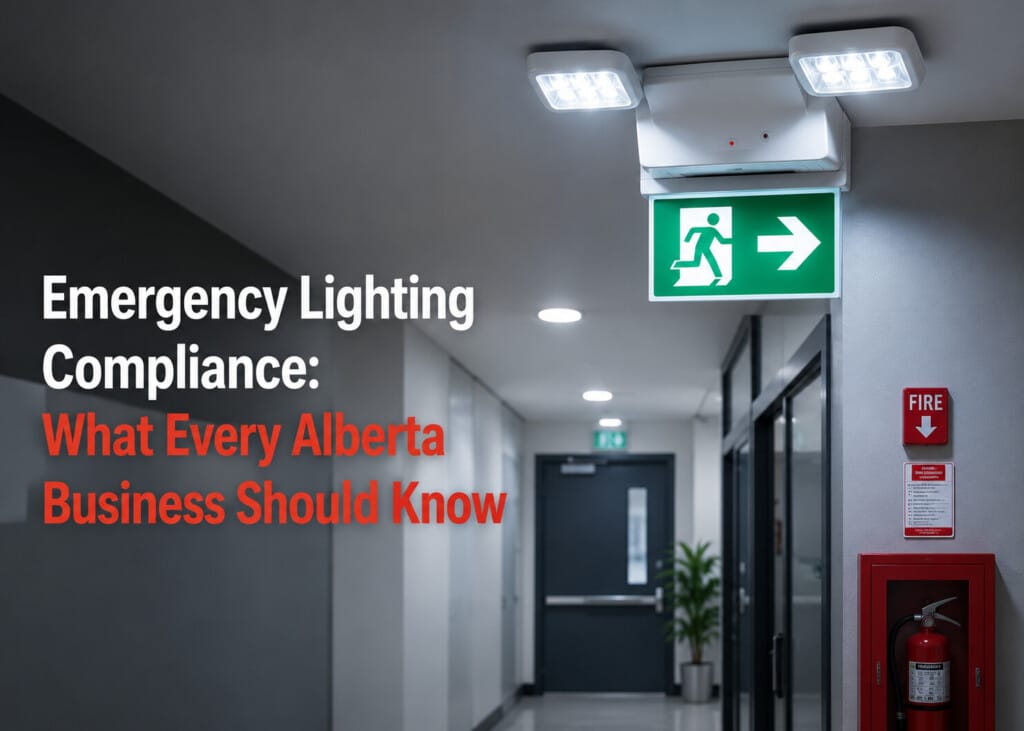
Emergency lighting is an important safety system for commercial buildings. During a power outage or emergency, it provides light so people can find exits and move safely. Alberta businesses must understand emergency lighting rules, inspection needs, and safety expectations to keep their buildings prepared. This guide explains the main points businesses should know about emergency lighting compliance.
Emergency lighting compliance means making sure commercial buildings have proper emergency lights that work during power failures or emergencies. Alberta businesses must follow safety requirements to keep exit routes visible and support safe movement inside the building. Emergency lighting compliance in Alberta helps protect employees, visitors, and property by ensuring emergency lighting systems are ready when needed.
Emergency Lighting Compliance in Alberta Commercial Buildings
Commercial buildings across Alberta use emergency lighting systems to support safe evacuation during unexpected situations. These lights provide temporary lighting when normal power is not available.
Offices, warehouses, retail stores, industrial buildings, and other commercial properties need emergency lighting systems based on their layout and safety needs. Proper placement helps people move toward exits without confusion during an emergency.
Compliance is not only about having lights installed. The system must be placed correctly, remain visible, and work properly when normal lighting fails.
The Purpose of Emergency Lighting during Power Outages
A sudden power outage can make a building unsafe, especially in areas with limited natural light. Hallways, stairways, and exit paths can become difficult to see without backup lighting.
Emergency lights provide visibility so employees, customers, and visitors can safely move through the building. Clear lighting also helps people locate exit signs and follow evacuation routes.
For larger commercial properties, proper emergency lighting is especially important because people may not know the building layout during an emergency.
Important Emergency Lighting Requirements for Alberta Businesses
Commercial properties must follow proper Emergency lighting requirements to maintain safe conditions during power failures. These requirements focus on proper installation, visibility, and system operation.
Important requirements include:
- Emergency lights should provide clear lighting along exit paths, hallways, and stairways.
- Exit signs should remain visible during a power outage.
- Backup batteries should support emergency lighting when regular power is unavailable.
- Emergency lights should be installed in areas where people need safe movement.
- Lighting systems should be checked according to safety standards.
- Building changes should not block emergency lights or reduce visibility.
Following these requirements helps businesses create safer buildings and remain prepared for unexpected situations.
Common Areas That Need Emergency Lighting
Every commercial building has different safety needs based on its size, layout, and daily activities. However, emergency lighting is commonly required in areas where people need guidance during an outage.
These areas may include:
- Exit doors and evacuation routes
- Hallways and corridors
- Stairways
- Parking areas connected to the building
- Large work areas
- Storage and warehouse spaces
- Public entry and waiting areas
Proper placement allows people to move safely and quickly toward exits during an emergency.
Emergency Lighting Inspection and System Checks
An emergency lighting inspection checks whether the lighting system is working properly and ready for use during an emergency. These inspections help identify issues that may affect safety or compliance. During an inspection, professionals review important parts of the system, including:
- Emergency light fixtures
- Exit signs
- Battery backup systems
- Light placement
- Visibility of emergency routes
- Signs of damage or obstruction
Regular checks give business owners a better understanding of their emergency lighting system and help identify areas that may need attention.
Building Changes That Can Affect Emergency Lighting
Commercial buildings can change over time. Renovations, new walls, storage areas, and updated layouts may affect emergency lighting coverage. A light that was visible before construction may become blocked after changes are made. Exit routes may also change as businesses update their spaces.
Reviewing emergency lighting after major building changes helps confirm the system still supports safe movement throughout the property.
Emergency Lighting Planning for Alberta Businesses
A safe commercial building requires proper planning. Business owners and facility managers should know where emergency lights are installed and make sure exit paths remain clear.
Regular reviews of the building layout can help identify areas where emergency lighting may need updates. Changes such as new workspaces, storage areas, or equipment placement can affect how people move during an emergency.
A clear emergency plan combined with working lighting systems helps employees and visitors respond calmly during power failures or other urgent situations.
Supporting Safe Buildings with Professional Solutions
Emergency lighting systems need correct installation and regular checks to work properly during an emergency. Professional services help confirm that lights are placed correctly and provide proper coverage throughout the building.
Experienced technicians review the building layout, check emergency lighting locations, and identify possible issues that may affect safety. This is especially important for larger commercial properties with multiple rooms, floors, or exit routes.
Along with other building safety systems, reliable emergency lighting supports a safer environment for employees, customers, and visitors.
The Value of Regular Emergency Lighting Checks
Emergency lighting may not be used every day, but it must work when a problem occurs. Regular checks help confirm that lights, exit signs, and backup power systems are ready during an outage.
An emergency lighting inspection can identify issues such as damaged fixtures, weak batteries, blocked lights, or signs that equipment is not working correctly.
For Alberta businesses, keeping emergency lighting systems in good condition supports safer buildings and helps meet important safety expectations.
Frequently Asked Questions
Why do commercial buildings need emergency lighting?
Emergency lighting provides visibility during power outages or emergencies. It helps employees, visitors, and customers find exit routes safely when normal lighting is not available.
How often should emergency lighting be inspected?
Emergency lighting should be inspected according to applicable safety standards and building requirements. Regular inspections help confirm lights, exit signs, and backup systems are working properly.
What is checked during an emergency lighting inspection?
An inspection reviews emergency lights, exit signs, battery backup systems, placement, visibility, and overall operation to confirm the system is ready during an emergency.
Where should emergency lighting be installed in a commercial building?
Emergency lighting is commonly installed near exits, hallways, stairways, evacuation routes, and areas where people need clear visibility during power failures.
Can renovations affect emergency lighting systems?
Yes. Building changes such as new walls, storage areas, or updated layouts can block lights or change exit routes. A review may be needed after major changes.
Final Thoughts
Emergency lighting is an important part of commercial building safety. Understanding Emergency lighting compliance in Alberta helps businesses keep their properties prepared, protect occupants, and support safe evacuation during power failures. Proper installation, regular inspections, and professional guidance help ensure emergency lighting systems remain reliable when they are needed most.
Improve Your Building Safety with Reliable Emergency Lighting Solutions
A prepared building starts with reliable safety systems. GlobalTech Group provides professional emergency lighting solutions for commercial properties across Alberta. We help businesses improve safety, support compliance, and keep important systems ready during emergencies. Our team delivers solutions designed around the needs of each facility.